In this story · 4 sections
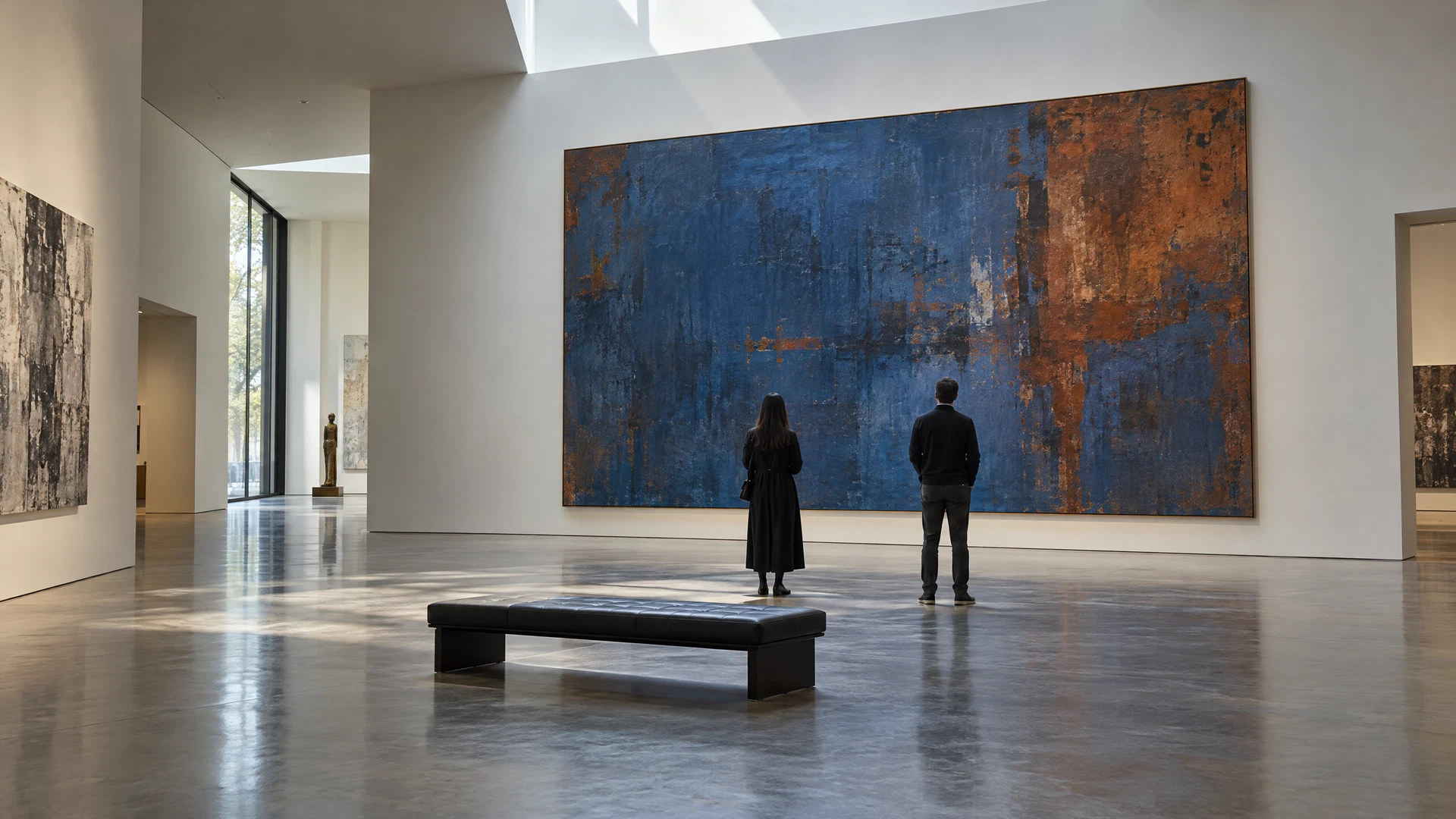
The first thing a visitor notices in a museum is rarely the art. It is the floor. Stone, polished concrete, a long walk from the entrance to the first room. By the second gallery, the question is not what to look at but where to sit.
Museums have begun to take that question seriously. Not as an afterthought, but as a design brief.
The bench as infrastructure
A bench is not a concession to the elderly. It is what allows anyone to stay longer. Museums that have added seating — properly placed, with backs and arms — report that visitors spend more time in galleries, not less.
The same is true of lighting and labels. A label set at 1.4 metres is readable for a standing adult and useless for a child or a wheelchair user. A lower shelf of labels, or a hand-held guide, changes who can read the room.
Access is not a ramp at the back. It is the route the exhibition expects you to take.
Sound and silence
Many museums are noisy in ways they do not measure: hard surfaces, overlapping audio guides, ventilation. For visitors with hearing aids, sensory sensitivity or simply fatigue, the result is exhaustion.
Some institutions are experimenting with quiet hours, softer flooring and directional speakers. The changes are cheap. The effect is disproportionate.
Context
Who is in the room
Curators are also rethinking whose story is told. That debate is louder than the one about benches, but it is connected: both are about who the room was designed for in the first place.
The label problem
Museum labels are written by experts for experts, then edited down. The result is often a compressed argument that assumes context the visitor does not have.
A newer approach writes the label first for a curious person with no background, then adds the specialist detail. It sounds obvious. It is surprisingly rare.
What good looks like
The best recent examples share a quality: they do not treat accessibility as a separate programme. Seating, lighting, labels and routes are part of the exhibition design, considered at the same time as the objects.
That is more expensive upfront and cheaper over time. It also produces a museum that is better for everyone, which is the only kind of accessibility that lasts.
The art has not changed. The room has. That turns out to matter.

Join the conversation
0 commentsNo comments yet. Add a considered thought — comments are moderated by the editors.