In this story · 3 sections
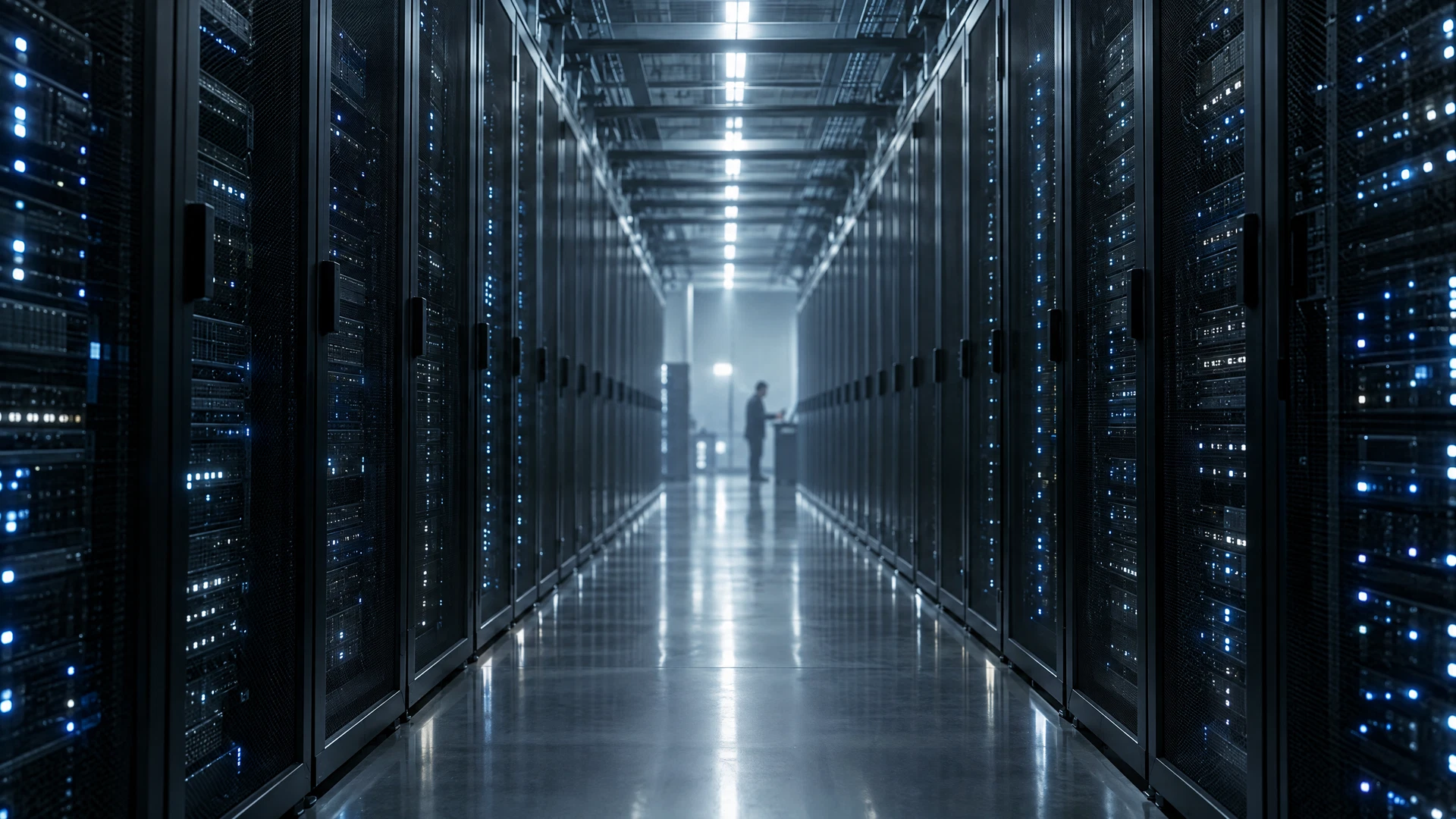
The building looks finished from the road: grey cladding, a row of cooling units, a security gate with no name on it. What is missing is the thing the building was built for. The power connection has a date, and the date is not this year.
For the past eighteen months, the conversation about artificial intelligence has been a conversation about chips. That framing is now incomplete. The binding constraint has moved to electricity — to the transformers, substations and transmission lines that stand between a model and a working service.
The queue is the story
Grid operators publish interconnection queues: lists of projects waiting for permission to draw power. In several regions, the queue is now measured in multiples of peak demand. One operator in northern Europe has received requests equivalent to roughly twice the highest load it has ever served.
Most of those requests will never be built. Some are speculative; others are competing for the same substation. But the queue itself has become a planning problem. It determines who gets power first, and therefore which projects exist at all.
The queue is not a waiting list. It is a rationing mechanism, and nobody designed it for this.
The people who run these systems are careful about the word “shortage”. They prefer “constrained”. A constraint can be managed with storage, demand response, new generation and, above all, time. A shortage suggests something that cannot be fixed.
What can be built quickly
The fastest additions are not glamorous. Gas turbines can be ordered and installed in a fraction of the time a transmission line takes. Batteries can shift demand by hours rather than seasons. Efficiency improvements in cooling can release capacity without adding a single megawatt.
Data-centre operators have noticed. New designs run hotter, reuse waste heat and buy power from dedicated renewable projects. Some are signing agreements to reduce consumption on demand, effectively becoming part of the grid’s balancing mechanism.
Context
The awkward arithmetic
A large AI campus can consume as much electricity as a small city. The grid was planned around the city, not around a building that appears in two years and grows from there.
The local question
The politics of this are local. A new substation is not controversial in the abstract; it is controversial at the end of a road. Residents ask about noise, land and whether the electricity will be used for something they recognise.
That is why the next phase of the AI build-out will look less like a technology story and more like a planning story. The companies that succeed will not simply be those with the best models. They will be the ones that learned how to wait, negotiate and share.
The building on the road is finished. The grid is not. In the gap between those two facts sits most of the industry’s near-term future.




Join the conversation
4 commentsDavid Chen
15 November 2026, 10:09 UTC
Would be interested in a follow-up on the water use of these campuses. Cooling is often the second constraint after power.
Anika Sørensen
15 November 2026, 07:45 UTC
The line about the queue being a rationing mechanism is exactly right. It is a policy instrument that nobody designed on purpose.
Marcus Webb
15 November 2026, 05:21 UTC
Useful piece, though I would have liked more on demand response. A data centre that can drop 50MW for an hour is effectively a power station, and we do not treat it that way in planning.
Ruth Ellison
15 November 2026, 02:57 UTC
The interconnection queue point is the one most people miss. I work for a regional operator and we spend more time explaining the queue to developers than actually studying the projects. A clearer application process would release a lot of capacity without a single new line.