In this story · 4 sections
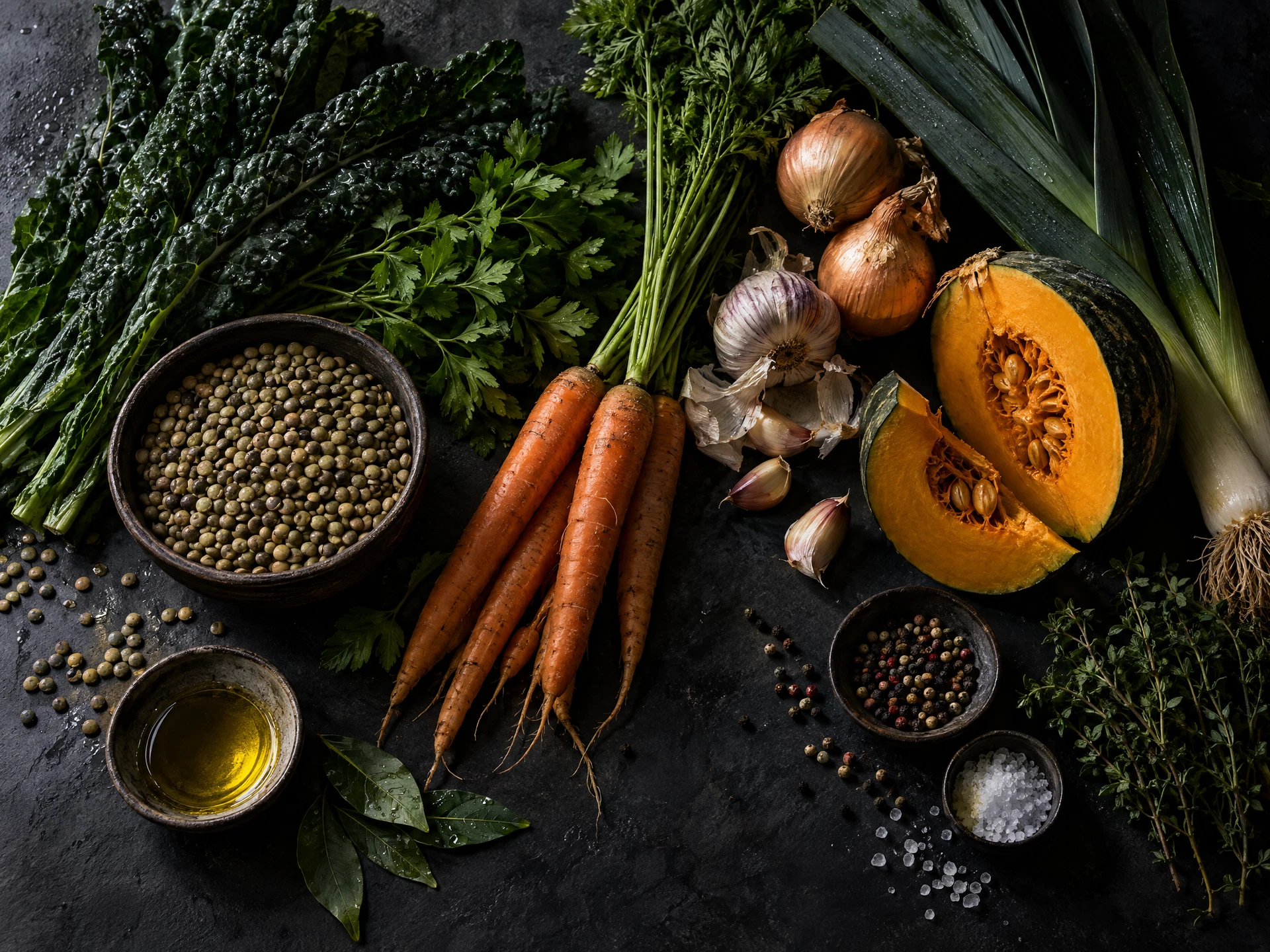
A recipe begins with a list. A market begins with a question: what is good today?
That difference sounds small. It changes the entire act of cooking. Instead of buying ingredients to satisfy a plan, you build a plan around what is available, affordable and ripe. The result is less waste and better food.
Prices are information
A market price is not a moral judgement. It is a summary of weather, transport, labour and demand. When tomatoes are expensive, it usually means something happened to the tomatoes.
Supermarkets smooth this information out. Markets expose it. A cook who shops at a market learns to read the season without opening a calendar.
The market does not care what you planned. It cares what survived the week.
Imperfection is a technique
The best produce at a market is often the least photogenic. A bruised peach is a peach that needs eating today. A bunch of herbs with wilted stems is a bunch that can be turned into sauce.
Learning to use those things is a skill, and it is the opposite of the aesthetic cooking that dominates social media. It is also cheaper.
Practical note
A market rule
Buy one thing you did not plan to buy, and one thing you know how to cook. Build the meal around the first, and use the second as the anchor.
The social layer
A market is also a place where knowledge is transmitted. The person selling the cheese knows when it was made. The person selling the fish knows what is fresh. That knowledge is not searchable.
It is also a relationship. Regular customers get better advice, and sometimes better produce. That is not corruption; it is the ordinary economy of trust.
What to do with this
None of it requires a market within walking distance. A greengrocer, a farm shop, a community-supported agriculture box: the principle is the same. Buy what is good, cook it simply, and let the plan change.
The market is not a nostalgic fantasy. It is a practical institution that has survived because it works. The lesson is not to romanticise it. The lesson is to pay attention.



Join the conversation
0 commentsNo comments yet. Add a considered thought — comments are moderated by the editors.