In this story · 4 sections
The morning has become a genre of content: cold plunges, journals, five-minute routines, a hundred small optimisations designed to make the day more productive. Most of them are proposals for adding things. The most useful change is usually subtraction.
A slower morning is not a lifestyle. It is a small piece of protected time, arranged so that the first hour does not belong entirely to other people.
Start with the night before
Sleep researchers are consistent on this point: the morning begins with the previous evening. A consistent wake time matters more than a perfect bedtime. Light matters more than most supplements. Alcohol, late screens and a warm room all make the first hour harder.
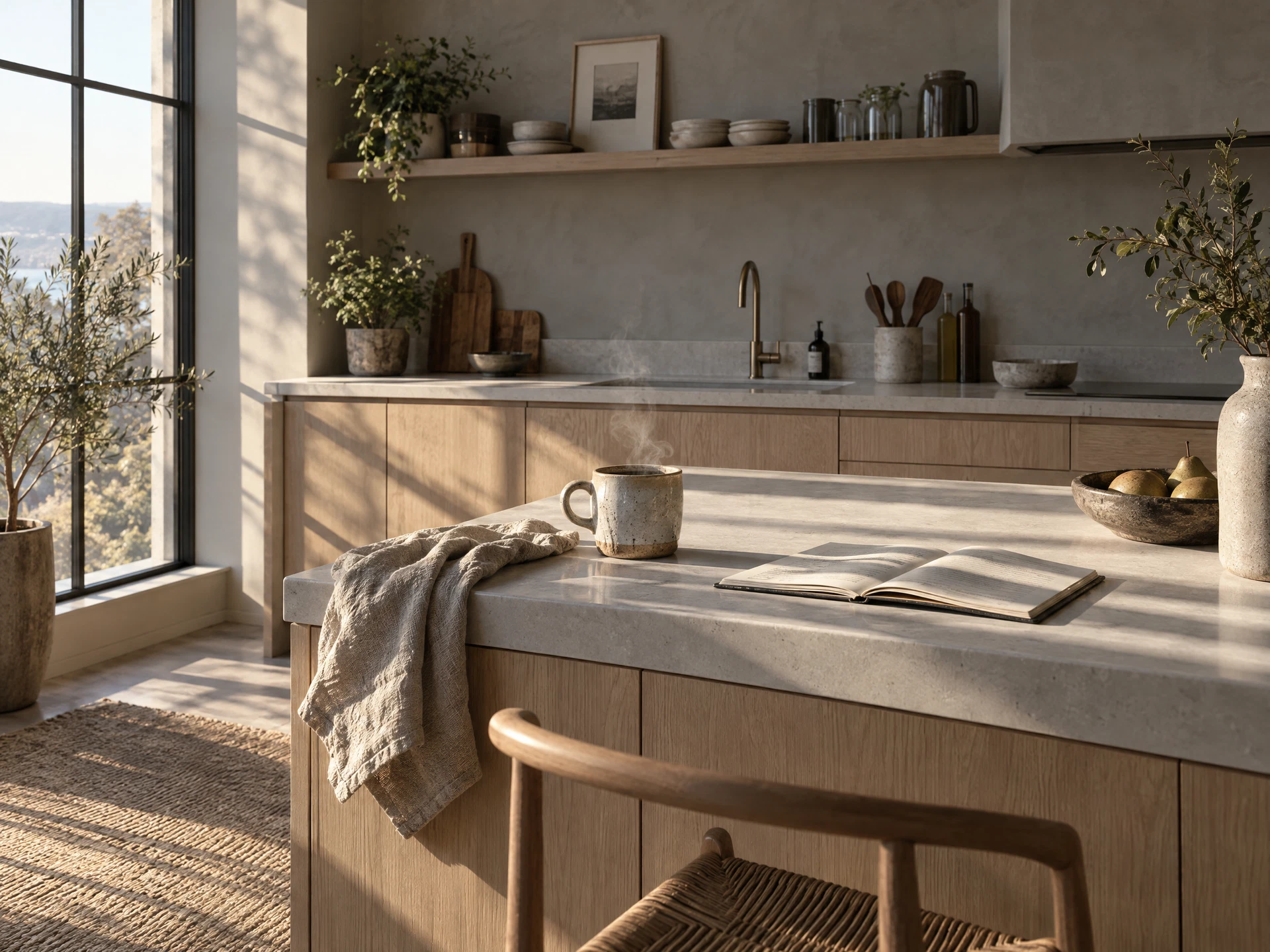
The design equivalent is equally simple. Put the things you need where you can reach them without decision. A kettle, a cup, a chair near a window. Reduce the number of choices before coffee.
A calm morning is not a personality trait. It is a layout.
Light before screens
Morning light tells the body what time it is. A few minutes outside, or near an open window, is more effective than any app that claims to optimise your circadian rhythm.
This is where interior design and physiology meet. Heavy curtains, dark kitchens and north-facing flats make the signal harder to receive. A sheer curtain, a lighter wall, a mirror opposite the window: small interventions with a real effect.
Context
The Scandinavian cliché
The pale wood and white walls of Scandinavian interiors are often sold as a style. They are also a response to darkness: maximising the light that exists, rather than pretending it is abundant.
The case for doing less
The productivity version of the morning asks what you can accomplish before 9am. The slower version asks what you can notice. These are not the same project.
A slow morning might include a walk, a proper breakfast, ten pages of a book, or nothing at all. The only requirement is that it is not optimised for output. The point is to begin the day as a person rather than a queue of tasks.
A practical arrangement
Keep the first twenty minutes free of input. Make the coffee the night before if that helps. Sit somewhere with light. Do not check the news until you have eaten something.
None of this is a rule, and none of it will fix a life that is genuinely too busy. But a small protected hour is easier to defend than a perfect routine, and it is more likely to survive a bad week.
The morning does not need to be productive. It needs to be yours.



Join the conversation
0 commentsNo comments yet. Add a considered thought — comments are moderated by the editors.