In this story · 4 sections
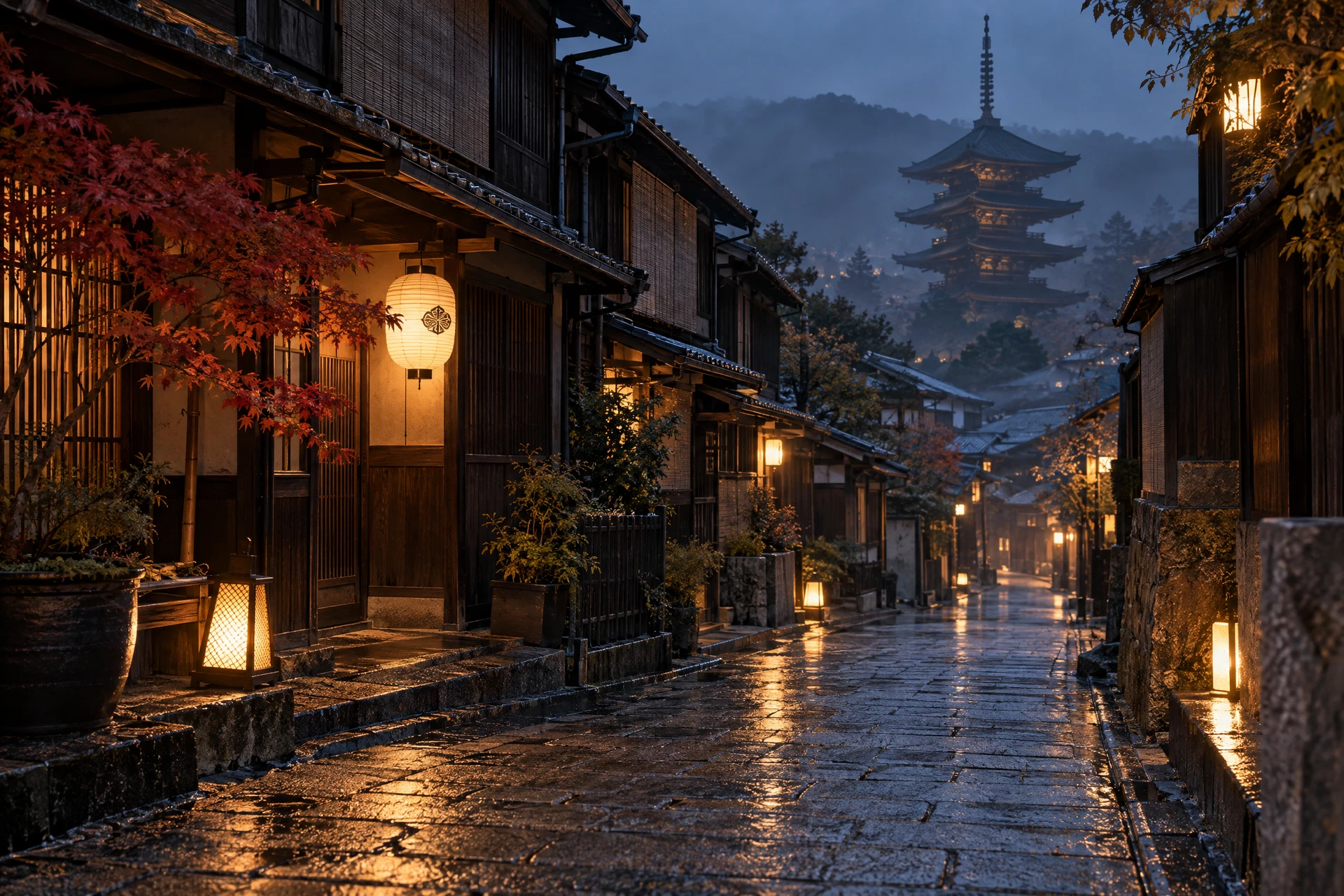
Kyoto has a tourism problem that is also a planning problem. The city’s most famous streets are narrow, its buses are shared with residents, and its temples are not theme parks. The visitor who arrives at noon experiences a different city from the one that exists at dawn.
The answer is not to avoid Kyoto. It is to adjust the clock.
The early walk
The Higashiyama lanes are open at 6am. The light is soft, the shops are shut, and the only other people are residents walking dogs and monks sweeping. By ten, the same route is a queue.
This is not a secret. It is a scheduling decision. The city’s own tourism authority now publishes guidance on spreading visits, partly to protect the streets and partly to protect the people who live on them.
The best time to see a place is usually the time when it is not performing for visitors.
Beyond the postcard
Kyoto’s identity is often reduced to a handful of temples and a geisha district. The city is also a centre of manufacturing, a university town and a place with ordinary neighbourhoods, supermarkets and bus routes.
Visiting those places requires etiquette. Do not photograph people without asking. Do not enter private lanes. Do not treat a residential street as an attraction.
Context
The bus problem
Local buses are crowded with visitors carrying luggage. The city has asked tourists to use the subway and taxis where possible. It is a small courtesy with a large effect on residents.
Eating well
The best food in Kyoto is not always in the guidebooks. A standing noodle counter near a station, a bakery in a residential district, a market stall selling pickles: these are not secrets, but they are not curated for visitors either.
The rule is simple: follow the people who live there, not the people holding the same guidebook as you.
A slower itinerary
Two nights, one neighbourhood, one early walk, one temple, one long lunch. Leave space for the city to surprise you. Kyoto rewards attention more than coverage.
The city is not a museum. It is a working place with a long memory. The visitor who remembers that will be welcomed, quietly, and will see more.




Join the conversation
0 commentsNo comments yet. Add a considered thought — comments are moderated by the editors.